

About the
Mwadui Mine
First Significant Mine
Outside South Africa
The Williamson Diamond Mine, also known as the Mwadui Mine, is located about 23 kilometres northeast of Shinyanga. It was discovered in March 1940 when a kimberlite pipe was identified by Dr. John Williamson, who later established the mine here.
It became the first significant diamond mine outside South Africa and has operated continuously ever since, making it one of the oldest diamond mines still in operation today. Over its lifetime, the mine has produced more than 19 million carats (3,800kg) of diamonds — including some of the rarest pink diamonds ever found.
The mine is a large open-pit operation, currently around 90 metres deep, employing about 1,100 staff — the vast majority Tanzanian. Operations are composed of four core activities: mining of the pit, re-treatment of tailings to recover missed diamonds, and gravel mining on and adjacent to the property.
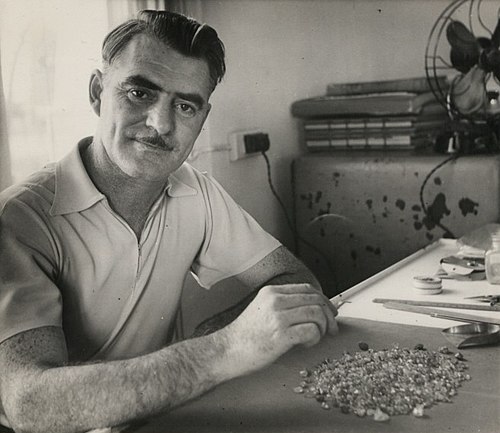
"From the heart of the earth, we bring the world its rarest treasures."
— Dr. John WilliamsonThe World's Largest
Kimberlite Pipe
The mine is located about 160km south of Mwanza in the Kishapu District of Shinyanga Region. Williamson named the site "Mwadui" after a local chief — "Williamson" and "Mwadui" are now virtually synonymous in the diamond mining world.
At 146 hectares at surface level, the kimberlite pipe ranks as the largest economically exploitable diamond-bearing volcanic pipe on earth. Exploratory drill cores indicate the pipe is pyroclastic, not hypabyssal as earlier suspected — meaning the current 90-metre pit could potentially extend to 350 metres, and further still with underground operations.
On the National
Currency Itself
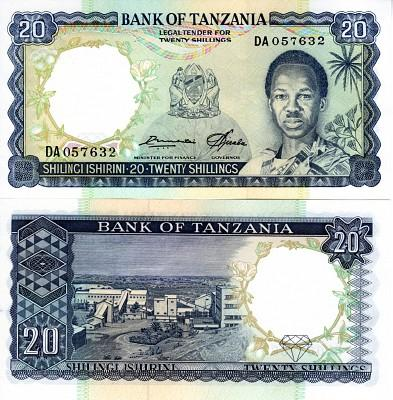
The 1966 Bank of Tanzania 20 Shilling banknote featured Williamson Diamond Mine on its reverse side.
This recognized the mine's importance to Tanzania's economy and its contribution to national development — a rare honour that speaks to just how central Mwadui has been to the country's story since independence.
Ore grade has declined from roughly 30 carats per hundred tons in the mine's first 25 years to around 6 carats per hundred tons today — a tenfold drop reflecting the depletion of the richest near-surface ground. Notable stones include the 54.5-carat Williamson Pink Diamond, presented to Princess Elizabeth and Prince Philip on their 1947 wedding, and a 388-carat diamond found in 1990.
Eight Decades of
Diamonds and Change
A mine whose ownership has mirrored the history of Tanzania itself — from colonial discovery to full Tanzanian ownership today.
Early Discoveries Near Mabuki
Diamonds were first found near Mabuki, south of Mwanza, before WWI but not commercially exploited until after the war. Production peaked at 23,000 carats in 1929, then declined sharply to just 1,387 carats by 1932.
Dr. John Williamson Discovers Mwadui
Hired by the Mabuki mine in 1938, Williamson used it as a base for regional prospecting. In 1940 he discovered the Mwadui kimberlite pipe, developing the mine over the following years despite WWII shortages of equipment and funding.
Tanzania's First Major Mine
By the 1950s Williamson had built the first significant diamond mine in Tanzania, employing 2,600 African, 110 European and 60 Asian workers. He closely managed the mine until his death in 1958, aged 50.
Nationalization
After Dr. Williamson's death in 1958, his heirs sold the mine to an equal 50/50 partnership between De Beers and the colonial Government of Tanganyika. De Beers then managed the operation. In 1971, a decade after Tanzania's independence, the government nationalized the mine, taking it fully under state control. It was subsequently operated by the Tanzanian State Mining Corporation (STAMICO) from 1974 to 1993.
De Beers Returns
In 1993, Tanzania invited De Beers back, and the company returned as operator in 1994 with a 75% ownership stake, while the government retained the remaining 25%.
Petra Diamonds Acquires the Mine
Petra Diamonds Ltd agreed to acquire the Williamson Mine from De Beers in September 2008, completing the acquisition in February 2009.
Mothballed, Then Sought a Buyer
In April 2020 the mine was mothballed after diamond prices collapsed. Talks to reopen in late 2021 did not materialize, and by September 2021 Petra was seeking a buyer, describing the mine as permanently closed. By 2021, the Tanzanian government's stake had grown to 37%, reflecting a broader push by the government to increase state participation in the country's mining sector.
Full Tanzanian Ownership
Pink Diamonds Investments Limited, an affiliate of Taifa Group, acquired Petra's entire 63% stake — bringing the historic mine to 100% Tanzanian ownership for the first time in its history.